
Rush County Tax Record Fields
The Rush County Appraiser discovers, lists, and values taxable and exempt property as of January 1. The Treasurer keeps the bill and payment trail. The Clerk publishes local levy documents. Read the keeper and year beside each number.
| Field | What It Shows | Where |
|---|---|---|
| Appraised value | Statutory valuation basis | Appraiser |
| Assessed value | Appraised value after class rate | Appraiser |
| Property class | Controls assessment treatment | Appraiser and state law |
| Tax bill and status | Amount due, paid, or delinquent | Treasurer |
| Taxing districts | Levies applied to the parcel | Clerk and Treasurer |
Three terms drive the math. Appraised value is the base. Assessed value is what remains after the class rate applies, and a mill means one dollar of tax per thousand dollars of that assessed figure. The final bill comes from combined district levies, never from a single rate applied to a sale price.
Rush Appraiser's January Snapshot
Real and personal property is appraised as of January 1. Most real property follows fair-market-value principles. Agricultural land uses a productivity formula. Agricultural improvements and a farm residence can receive separate class treatment.
The Appraiser reinspects all real property on a six-year cycle under K.S.A. 79-1476, with about 17 percent physically inspected each year. A reinspection updates facts used for valuation. It is not a sale or a new deed.
Note: Pair each value with its valuation date and class before comparing it with a sale or nearby parcel.
Calculate Rush County Property Tax
Kansas tax math runs in sequence. Appraised value multiplied by the assessment rate gives assessed value. Assessed value multiplied by the mill levy gives the tax. The state's 11.5 percent residential example is just an example. Classes differ, so do not apply it to agricultural land without checking the class.
The Kansas tax formula explains the calculation. The Rush County Clerk links the levy PDFs. You need both to explain the final number.
Find a Rush County Tax Bill
The Treasurer posts a county tax endpoint, though it does not always load. Its fields, tax-year coverage, and export options may vary by visit. Start with the parcel key from ORKA, then test the official link.
- Copy the site address and parcel identifier.
- Follow the Treasurer's county tax-search link.
- Match the parcel and desired year.
- Read the levy, balance, and payment status exactly as labeled.
- Assessed value
- The value to which the levy applies.
- Mill levy
- The district rate per thousand dollars.
- Payment protest
- A formal route tied to the tax payment.
- Tax lien
- A claim securing unpaid tax.
Phone, mail, or the courthouse counter all work if the link stays down. The Treasurer is at 715 Elm, La Crosse, and can be reached at 785-222-3416. Kansas.gov payment needs details from a tax statement. It works best as a payment channel rather than an index. Try the official Rush tax endpoint first and see what it returns.
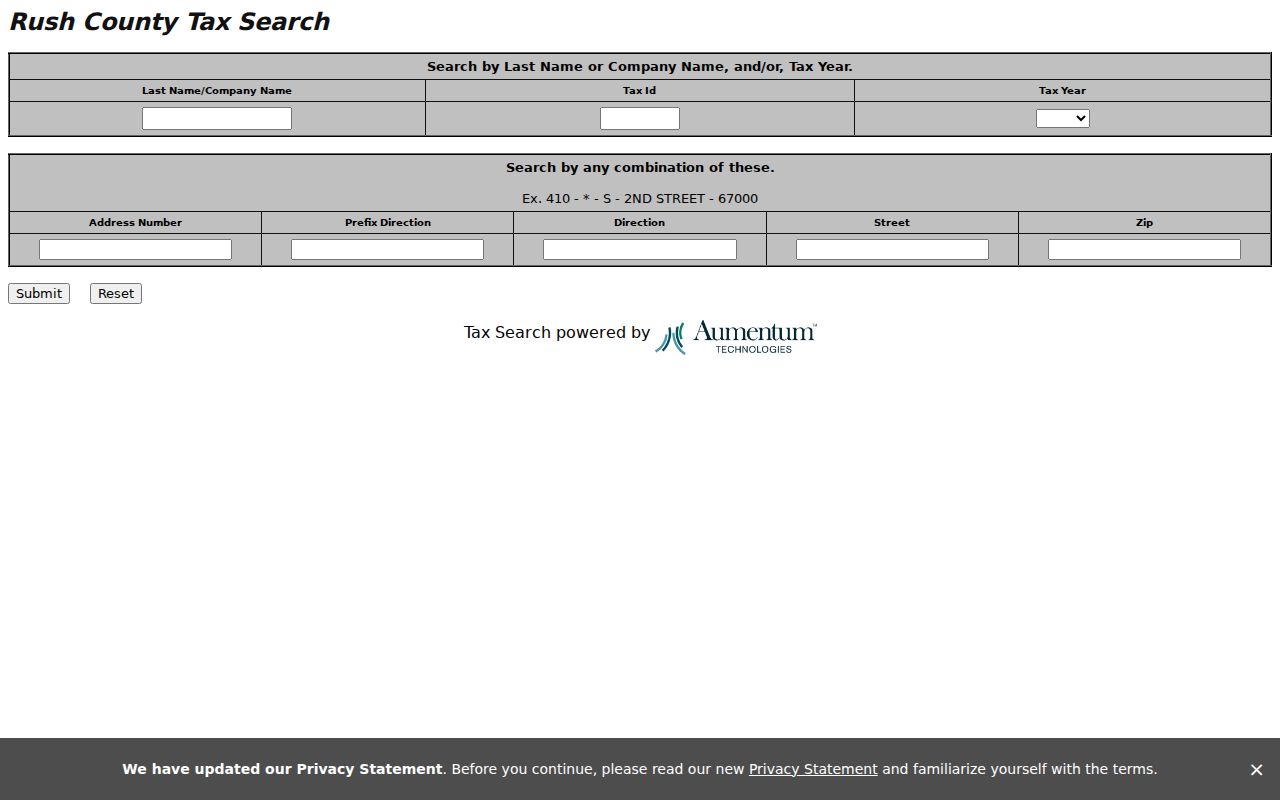
The capture records the online access gap and supports the direct office fallback.
Rush Agricultural Productivity Value
Agricultural land is valued by productivity, not the market comparison used for most homes. Improvements and a farm residence may be separate entries, so one rural record can show several classes at once. Use the Kansas agricultural valuation explanation beside the Rush roll, reading acreage, use, improvements, and residence on their own terms.
Rush Levies and Payment Protest
The Clerk publishes district levy material, and the Treasurer links a Payment Under Protest form. A protest and a value appeal are different routes. So keep the notice date, tax year, legal description, and proof of filing close. Get the current form from the county itself, since linked PDFs vary. Ask which procedure and deadline control your stage.
Delinquent Rush Property Taxes
A missing web result does not mean no tax is due. Kansas procedures include statutory notices and tax sales. Rush publishes no online delinquent-property list, though, so ask the Treasurer for parcel-specific status. A district court case can explain a litigated lien. It still cannot replace the Treasurer's ledger. Parties plus the legal description should match before you tie a case to land.
Rush County Levy and Delinquency Trails
A levy is the rate a taxing district applies. A payment under protest preserves a challenge through a set payment procedure. Neither one means the Appraiser changed the valuation. Keep the valuation notice, tax statement, district levy, protest form, and office response together. Each documents a different stage of the same year's property tax record. The County Clerk publishes levy and notice material. Kansas guidance describes how delinquent real-estate tax sales are published. Ask the Treasurer for a parcel balance. Ask the Clerk for the publication or administrative file. If litigation followed, Kansas CaseSearch and the courthouse terminal offer a second trail. Do not read an old notice as current delinquency. Payment, redemption, or court action may have changed the status.
Rush County Property Tax Exemptions
The Appraiser maintains both taxable and exempt property. Rush publishes no online exemption list or application portal. Check the Kansas Property Valuation Division form index for current state forms. Then ask the Appraiser which filing, proof, and deadline apply to the parcel and tax year. An exemption changes the taxable result. It does not rewrite a deed or the parcel itself. Record the exemption type and effective year apart from appraised value, assessed value, and tax due. Agricultural classification also needs care. Kansas values agricultural land by productivity. Improvements and a farm residence may fall under other class treatment.
Keep Rush Tax Years Separate
Keep every tax year on its own page. A paid amount from one year tells you little. A sale price never reaches back to change an older assessment. Match the year, valuation date, class, levy district, and payment status each time you compare. When the county's online tax endpoint will not load, hold onto the paper statement. Then ask the Treasurer to confirm the account year, balance, and payment history. Bring the same tax year to the Appraiser. Ask for the valuation and classification on the roll. That two-office check matters. It keeps a correct number from landing on the wrong year or record function.
Contest a Rush Assessment
The Kansas property-tax calendar sets the sequence for notices, informal meetings, and appeals. The deadline depends on the notice and the route. Contact the Rush Appraiser promptly. Gather comparable records and condition evidence, and keep proof of filing.
The state form index supplies current appeal materials. Waiting for the bill can narrow the procedures still open. Use the valuation notice date as your starting point. Review the official appeal calendar before you choose a route.
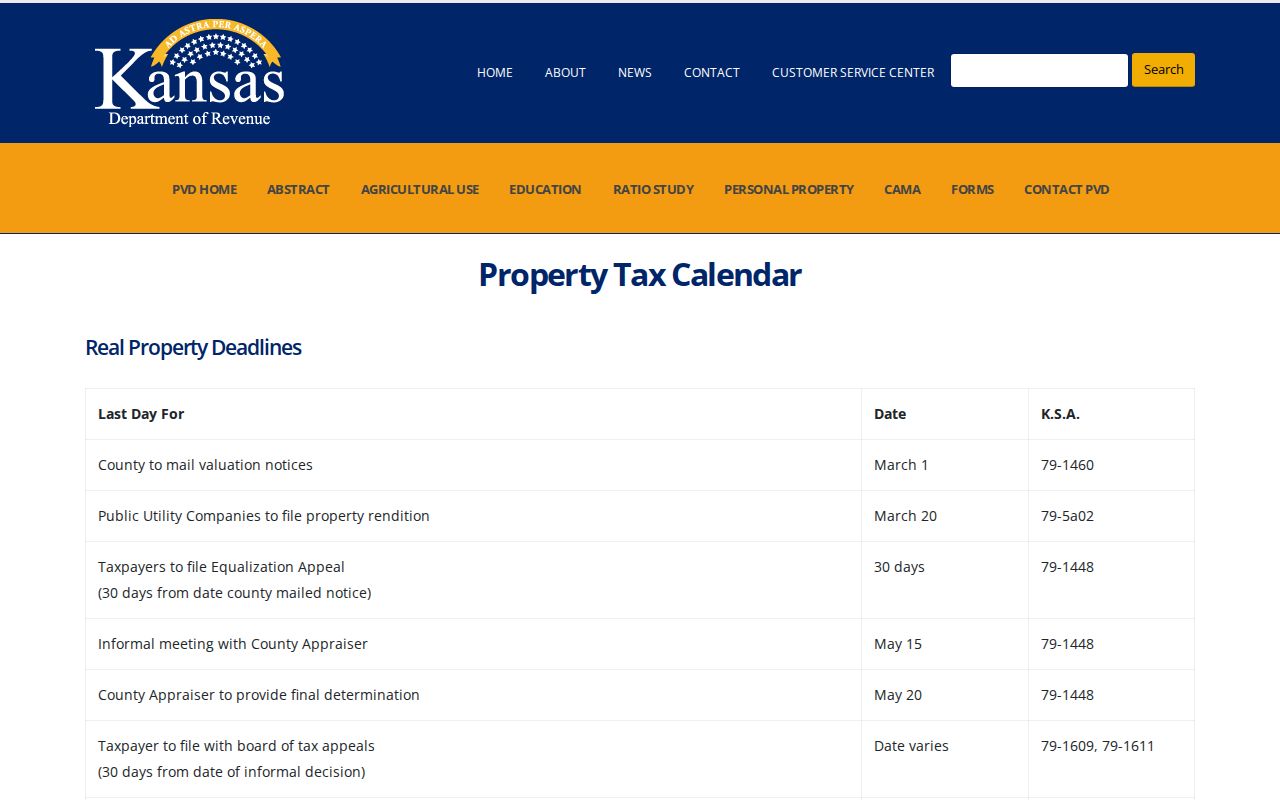
The state calendar supplies timing context, while Rush offices apply it to the parcel.
Act from the notice date. Appeal windows are short. Confirm the current deadline, form, and next hearing step with the Rush Appraiser.